


MCT oil has become a popular ingredient in keto and low-carbohydrate diets. You may have seen it added to morning coffee, blended into smoothies or used in recipes. But what exactly is MCT oil, how is it different from coconut oil, and do you need to follow a keto diet to use it?
MCT stands for medium-chain triglycerides, a type of dietary fat. MCT oil usually contains concentrated amounts of two fatty acids, C8 and C10. These fats are processed differently from many of the longer-chain fats in everyday foods.
Researchers have also observed that MCT oil, particularly C8, can temporarily increase blood ketone levels. However, this does not automatically translate into greater weight loss or other health benefits.
Let’s explore what makes MCT oil different and how to use it in everyday life.
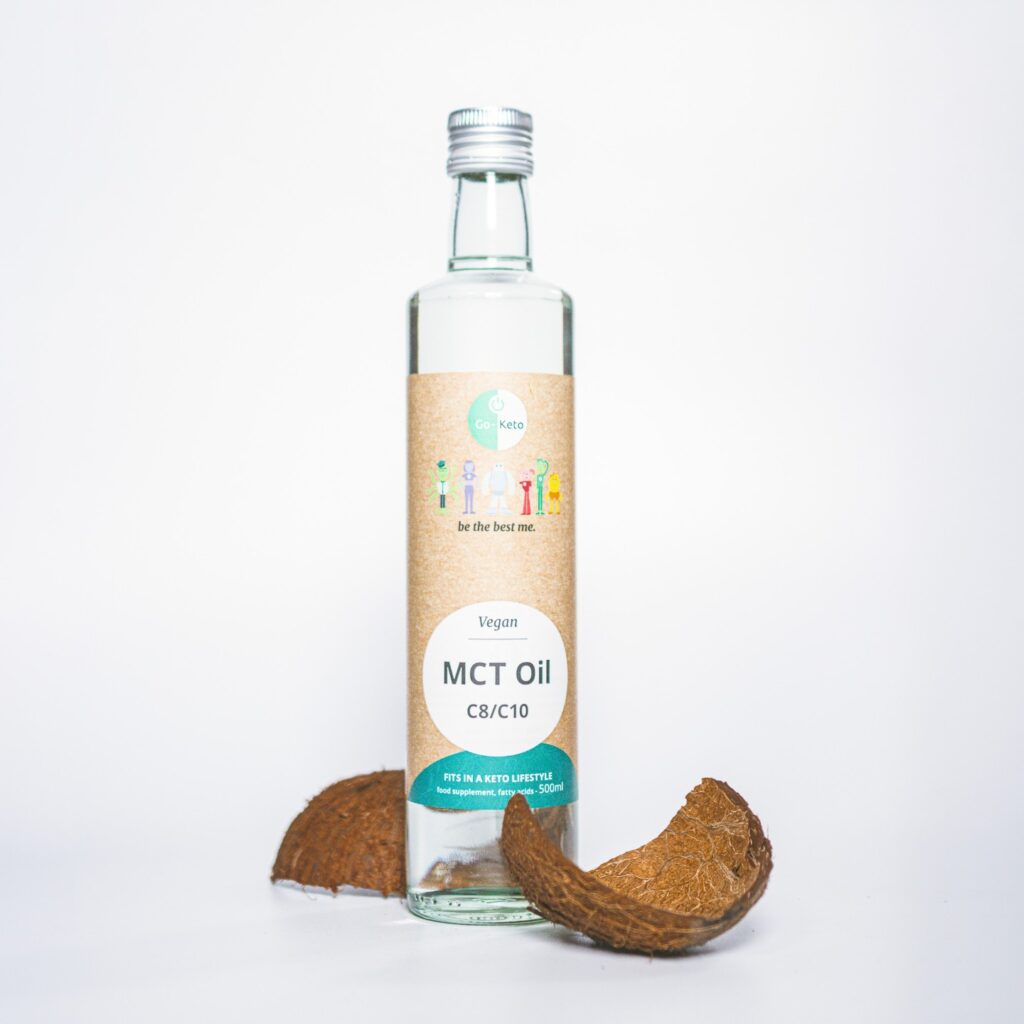
What exactly is MCT oil?
Most of the fat we eat consists of triglycerides — molecules made up of fatty acids attached to glycerol.
Fatty acids vary in length. This matters because their structure influences how they are digested, absorbed and metabolised.
MCT oil contains medium-chain fatty acids, particularly:
- C8 – Caprylic acid: A fatty acid containing eight carbon atoms.
- C10 – Capric acid: A fatty acid containing ten carbon atoms.
Compared with many longer-chain fats, C8 and C10 are absorbed and transported to the liver relatively quickly, where they can be used in energy metabolism.
MCT oils are commonly made by separating and concentrating specific fatty acids from coconut oil or palm kernel oil. Coconut-derived MCT oil is a popular choice, and some brands use coconut oil exclusively.
The result is a concentrated oil that is usually clear, mild in flavour and easy to incorporate into food and drinks.
MCT oil versus coconut oil: what’s the difference?
Although MCT oil is often made from coconuts, it is not the same as ordinary coconut oil.
Coconut oil naturally contains a mixture of fatty acids, including lauric acid (C12), alongside smaller amounts of C8 and C10.
Lauric acid is frequently classified as a medium-chain fatty acid because it contains twelve carbon atoms. However, its absorption and metabolism differ from those of C8 and C10.
MCT oil concentrates particular medium-chain fats, usually C8, C10 or a combination of both.
There is also a practical difference. Coconut oil often becomes solid at cooler room temperatures and has a recognisable coconut flavour. MCT oil generally remains liquid and has a much more neutral taste.
Neither is automatically better for every purpose. Coconut oil can be useful in cooking when its flavour is welcome, while MCT oil is especially convenient for mixing into drinks and cold dishes.
C8 versus C10: which MCT oil should you choose?
Not all MCT oils have the same fatty-acid composition.
C8 MCT oil – Caprylic acid
C8 contains eight carbon atoms and has been studied extensively for its effects on blood ketone levels.
In small human crossover studies, C8 produced a greater short-term increase in blood ketones than C10 or conventional coconut oil.
This makes pure C8 particularly interesting for researchers studying ketone metabolism.
However, a stronger ketone response does not necessarily mean that pure C8 provides greater overall health benefits.
C10 MCT oil – Capric acid
C10 contains ten carbon atoms.
Like C8, it is a medium-chain fatty acid, but the two are not metabolised in exactly the same way. In short-term human studies, C10 has generally produced a smaller rise in blood ketones than C8.
C10 is often combined with C8 in commercially available MCT oils.
How does MCT oil work in the body?
When you eat fat, your digestive system breaks triglycerides down into components that can be absorbed and metabolised.
C8 and C10 follow somewhat different metabolic pathways from many longer-chain fatty acids.
Once they reach the liver, some of these fatty acids can be converted into ketone bodies.
Ketones are molecules that the body can use as an alternative fuel. They are produced naturally, particularly when carbohydrate availability is reduced or during fasting.
The three main ketone bodies are acetoacetate, beta-hydroxybutyrate and acetone.
Does MCT oil put you into ketosis?
Not necessarily.
Human studies have shown temporary increases in blood ketones after consuming MCT oil, including in people who are not following a ketogenic diet.
But a temporary rise in ketones is not the same as maintaining nutritional ketosis over time.
The response depends on several factors, including the MCT composition, the amount consumed, the accompanying meal and individual metabolism.
Does MCT oil help you burn body fat?
This is where an important distinction is needed.
MCT oil is a source of dietary fat. When your body metabolises it, you are using energy from the fat you have consumed.
That does not automatically mean you are burning more stored body fat.
Studies have investigated MCTs and weight management, but results depend on the study design, dietary context and what other fats are being compared.
MCT oil also provides calories, just like other oils. It is therefore better understood as one possible ingredient in your diet rather than a shortcut to weight loss.
How can you use MCT oil in everyday life?
One of the appealing things about MCT oil is its versatility. You do not need to follow a ketogenic diet to use it. Its relatively neutral flavour makes it easy to include in different meals and drinks.
Here are six practical ideas:
1. Stir it into your morning coffee or tea
Add a small amount of MCT oil to coffee or tea. Stir or blend it into the drink, depending on the texture you prefer.
2. Blend it into a smoothie
MCT oil mixes easily into smoothies. Try combining it with unsweetened yoghurt, berries or other ingredients you enjoy.
3. Mix it into yoghurt or breakfast bowls
A small amount can be stirred into plain yoghurt or added to a breakfast bowl with nuts and seeds.
4. Make your own salad dressing
Combine MCT oil with olive oil, lemon juice, mustard and herbs for a simple homemade dressing.
5. Add it to soups or prepared dishes
Stir a little MCT oil into a prepared soup or drizzle it over vegetables just before serving.
6. Use it in no-bake recipes
MCT oil can be mixed into cocoa-based sauces, homemade dressings and other recipes that do not require high-temperature cooking.
Because MCT oil is not generally intended as a high-heat frying oil, check the manufacturer’s instructions before using it in heated preparations.
How much MCT oil should you use?
There is no universal requirement to consume MCT oil every day.
If you are trying it for the first time, starting with a small amount is sensible.
For example, you could begin with approximately 5 ml (one teaspoon) mixed into food.
If you tolerate it well, you can gradually adjust the amount according to your preferences and the product instructions. Around 15 ml is a common culinary serving, but it is not a necessary daily target.
Remember that MCT oil is still an energy-dense fat. Consider it as part of your overall food intake rather than something you must add on top of your usual meals.
Can MCT oil cause side effects?
Yes. Some people experience digestive discomfort, particularly when consuming larger amounts or introducing it too quickly.
Possible symptoms include nausea, abdominal discomfort and diarrhoea.
A 2026 systematic review identified gastrointestinal complaints as the most frequently reported adverse effects in studies involving MCT consumption.
Starting with a small amount and avoiding unnecessarily large servings can help you assess your individual tolerance.
If you have a medical condition requiring a specialised diet, or you use MCTs as part of medical nutrition therapy, follow advice from your healthcare professional.
Frequently asked questions about MCT oil
1. Do I need to follow a keto diet to use MCT oil?
No. MCT oil is a dietary fat that can be included in different eating patterns. You can use it in coffee, smoothies, dressings and other meals, whether or not you follow a ketogenic diet.
2. Does MCT oil break a fast?
Yes, if you mean a strict calorie-free fast. MCT oil contains fat and provides energy, so consuming it breaks a calorie-free fast.
3. Is pure C8 better than C8/C10?
Pure C8 has produced higher short-term blood ketone responses in some small human studies. However, that does not establish that it is a better choice for everyone. A C8/C10 blend is also a practical everyday option.
4. Can I cook with MCT oil?
It is usually best suited to cold preparations, drinks or adding to food after cooking. Check the instructions for the specific product, as MCT oils are not generally designed for high-temperature frying.
5. Should I take MCT oil every day?
You do not have to. Whether you use it occasionally or regularly is a matter of dietary preference. There is no established need for everyone to supplement their diet with MCT oil.
The bottom line: where does MCT oil fit into a healthy lifestyle?
MCT oil is an interesting dietary fat with a distinctive composition and metabolism.
Understanding the difference between C8 and C10 can help you make a more informed choice. Pure C8 has shown a stronger short-term ketone response in human studies, while C8/C10 blends offer another convenient option for everyday use.
But MCT oil is not essential for a ketogenic diet, and higher ketone levels should not be confused with guaranteed improvements in health or weight management.
Whether you follow keto, prefer a lower-carbohydrate diet or simply enjoy experimenting with different ingredients, MCT oil can be an easy addition to your kitchen.
Curious to explore the different options?
https://www.go-keto.com/en/mct-oil/
References
- Vandenberghe, C. et al. (2017). Tricaprylin Alone Increases Plasma Ketone Response More Than Coconut Oil or Other Medium-Chain Triglycerides: An Acute Crossover Study in Healthy Adults. Current Developments in Nutrition. DOI: 10.3945/cdn.116.000257.
- Vandenberghe, C. et al. (2019). Plasma Ketone and Medium Chain Fatty Acid Response in Humans Consuming Different Medium Chain Triglycerides During a Metabolic Study Day. PubMed.
- The Ketogenic Effect of Medium-Chain Triacylglycerides (2021). Review of human studies, composition, dosing and ketone responses. PubMed.
- Medium-Chain Triglyceride Oil and Blood Lipids: A Systematic Review and Meta-Analysis of Randomized Trials (2021). PubMed.
- Scheller, M., Frenser, M., Valembois, J. and Fischer, T. (2026). Gastrointestinal issues predominate among side effects of medium-chain triglyceride consumption in humans. Frontiers in Nutrition. DOI: 10.3389/fnut.2026.1829954.
- EFSA Panel on Dietetic Products, Nutrition and Allergies (2011). Scientific Opinion on the substantiation of health claims related to medium-chain triglycerides and reduction in body weight. EFSA Journal, 9(6), 2240. DOI: 10.2903/j.efsa.2011.2240.
Written by Go-Keto